
Chandra Aiesha · Restorative Care Practitioner + Founder
There is a lot happening at Queen By Nature right now. Sundays at Rest House. Special programming. Practitioners coming into residence. New ways to experience the sanctuary.
But I never want the programming to get louder than the reason this space exists.
The womb is still the center.
So I want to talk about yoni steaming. It sits at an interesting crossroads: traditional practice, contemporary wellness, spirituality, emerging research and modern medicine all have something to say about it. Depending on who you ask, it is either an ancient answer to everything or a trend that should be ignored.
I don't think either of those is honest.
Women deserve both tradition and good information.
A practice with many names
A lot of women have come across steaming through social media, and that is a beautiful way to find it. But long before it was shared online, steaming was an Indigenous and ancestral practice, passed down across the globe under different names and in different ways, often with similar intentions. Because it grew out of traditional knowledge rather than clinical settings, it has not been widely studied or accepted in mainstream medicine.
Some of the oldest medical writing in the world mentions it. An Egyptian papyrus from around 1800 BC, known today as the Kahun Gynaecological Papyrus, describes treating the womb with the fumes of incense and oil. Greek physicians writing in the 400s and 300s BC turned to herbal vapor baths for women again and again, with plants like laurel. And in 1682, an English medical illustration showed a midwife giving a womb fumigation to a woman hoping to conceive, the fumes gathered beneath her skirt. Not all of these were steam as we know it today, and some used smoke, but they belong to the same long lineage of women receiving botanical warmth.
Much of this knowledge, though, was never written down at all. It lived in grandmothers' hands and was carried from generation to generation, which is why so many of these traditions have no written starting point.
One of the most detailed records of a living tradition comes from Suriname. In 2008, ethnobotanist Tinde van Andel and colleagues published research on the herbal steam baths used by Afro-Surinamese women, including women from Maroon communities, whose ancestors escaped slavery and built independent communities in the rainforest. The researchers documented 177 plant species from 55 botanical families used in genital steam-bath preparations.
Women in that study described using the baths for general cleansing, for tightening, for cleaning the uterus after childbirth and menstruation, and for sexual reasons.
Later research on Maroon herbal bathing in Suriname documented a much wider world of plant baths: baths for babies and adults, for the skin and for breathing, genital steam baths, and spiritual baths. I will come back to that.
Suriname is not the only place. In the mid-2000s, the World Health Organization's Gender, Sexual Health and Vaginal Practices study worked with women in Mozambique, South Africa, Indonesia and Thailand. Researchers documented a wide range of practices women used for hygiene, health and sexuality, including products meant to warm, dry or tighten. Materials presented from that study listed steaming and herbal "fogging" among the kinds of practices they recorded, with examples described in South Africa and Indonesia.
In Laos, researchers documented postpartum steam baths and a practice often called "mother roasting," in which a new mother rests on a bed over glowing embers with aromatic plants, among the Brou, Saek and Kry ethnic groups.
These are not one tradition. A Saramaccan woman in Suriname, a new mother in rural Laos, and a woman in South Africa are not doing the same thing, with the same plants, for the same reasons, or with the same meaning. Flattening them into one universal "ancient yoni steam" story erases what makes each of them real.
But taken together, they point to something simple. Wherever you first heard about it, you are joining a very long line of women who have turned to botanical warmth as a way of caring for themselves.
But what about the experience itself?
When women talk about why they come back to steaming, they rarely start with a lab value. They talk about how it feels.
Warmth.
Stillness.
Uninterrupted time with your body.
The smell of botanicals rising.
Quiet.
Rest.
Being cared for in a space someone prepared before you arrived.
Intentional slowing down.
Women often describe feeling deeply relaxed, grounded and warm through their whole body. Some say they feel more connected to their cycle, or simply more at ease in their own skin afterward. Some use steam time to mark a new season: the close of a cycle, the weeks after a birth when their provider says they are ready, or a return to themselves after a hard stretch. Those are experiences, not medical claims, and they are real to the women who have them.
Something does not need to cure a gynecological condition to have value. A warm bath doesn't cure anything either, and most of us still understand why it matters.
For some women, a steam session is one of the rare times they sit with their own body without a task attached to it. I can't turn that into a clinical outcome, and I won't try. But I won't dismiss it either. (I wrote more about why rest belongs in ordinary life in Why Rest House Was Created.)

Your body is part of the conversation
Here is what I believe sits underneath all of it. You are allowed to be in conversation with your own body.
Steaming, like any practice, invites you to pay attention. How does the warmth feel today? Does this blend of botanicals feel good to you? Do you leave feeling settled, lighter, more like yourself? Or is something telling you this isn't for you right now?
Those signals matter. Being in touch with your body means noticing what supports you and what doesn't, and trusting yourself to choose. A practice can be beautiful for one woman and simply not be hers. Both are fine.
At Queen By Nature, we never want you to steam because someone told you to, or to keep going because you feel you should. We want you to arrive curious, notice what you notice, and take from the experience whatever is actually yours to take.
You are the one who gets to decide what this experience means for you.
The spiritual and metaphysical meaning
Across many cultures, water, plant baths, smoke, heat and cleansing practices have carried meaning beyond the physical. They have marked transitions. They have honored birth, femininity and sexuality. They have been used for cleansing, renewal, return, prayer and reflection.
In Suriname, research on Maroon herbal bathing describes communities where the spiritual world holds an important place in daily life. Alongside genital steam baths, researchers documented spiritual baths, including baths to clean a person's back of bad spirits and baths for the protection of a whole village. In that setting, a bath is not only about hygiene. It can be about protection, relationship and belonging.
Those meanings are cultural and spiritual. They are not medical evidence, and I don't want to present them as if they were.
Science can study temperature, tissue, blood pressure or symptoms. It cannot decide for a woman what an experience means to her.
At Queen By Nature, if you experience steaming as a time to pray, breathe, journal, release, reconnect, honor your cycle or simply sit quietly with yourself, that meaning is welcome here. It belongs to you. It just isn't a biological claim, and we won't turn it into one.
And Black women are having this conversation for ourselves.
In 2026, the journal Culture, Health & Sexuality published a qualitative study by Brenice Duroseau and colleagues on Black women's perceptions of vaginal steaming in the United States. It was a small study based on in-depth interviews with eight women, and only one of them had steamed herself.
What stood out was not a verdict. It was the nuance. The women were negotiating meaning and risk. Some saw steaming as potentially empowering or restorative. Others questioned its safety and its medical credibility. They talked about how information reached them through personal networks and online spaces, and they thought critically about what they heard.
A study of eight women cannot tell us what Black women as a whole believe, and it says nothing about whether steaming changes the body. What it does show is that we are not passively accepting wellness claims. We are asking questions and weighing the answers.
Give us the information. Give us the history. Give us the limitations. Give us the choice.
Then there is the part science is still figuring out.
There is a difference between saying "there has never been research" and saying "we do not yet have strong clinical evidence for many of the claims made about steaming." The second is true. The first is not.
Some of the most visible research efforts have come from inside the steaming field itself.
The Peristeam Hydrotherapy Institute, founded by Keli Garza, known to many as Steamy Chick, created the Pelvic Steam Testimonial Database. More than one hundred steam users completed a questionnaire rating how much concerns like menstrual discomfort, postpartum recovery or fertility bothered them before and after steaming. On the Institute's own summary, average ratings fell from 7.89 to 1.71 on a 10-point scale.
The Institute has also supported the Fourth Trimester Vaginal Steam Study, which describes itself as a pilot study of steaming after birth in the Los Angeles area. Its stated plan is to look at uterine size, cervical closure, afterbirth contractions, tear recovery, blood flow, blood pressure, hormone levels and emotional state.
That matters. People who care about this practice are trying to measure it instead of only talking about it.
It also matters to be clear about what those efforts are. The testimonial database is self-reported experience from people who chose to share, with no comparison group. The postpartum study describes itself as a pilot, and as of this writing I have not found its results published in a peer-reviewed journal. Neither is a large randomized clinical trial.
Interesting findings deserve further study. Preliminary findings should not be advertised as established medicine.
What mainstream medicine says
It is also worth hearing what mainstream gynecology says, because women deserve the full picture.
The vagina is self-cleaning, so steam isn't needed to "clean" it. Physicians describe steam as warming the vulva and outer tissue rather than traveling up into the uterus. And clinical research has not established steaming as a treatment for conditions like fibroids, infertility, infections or hormone imbalance.
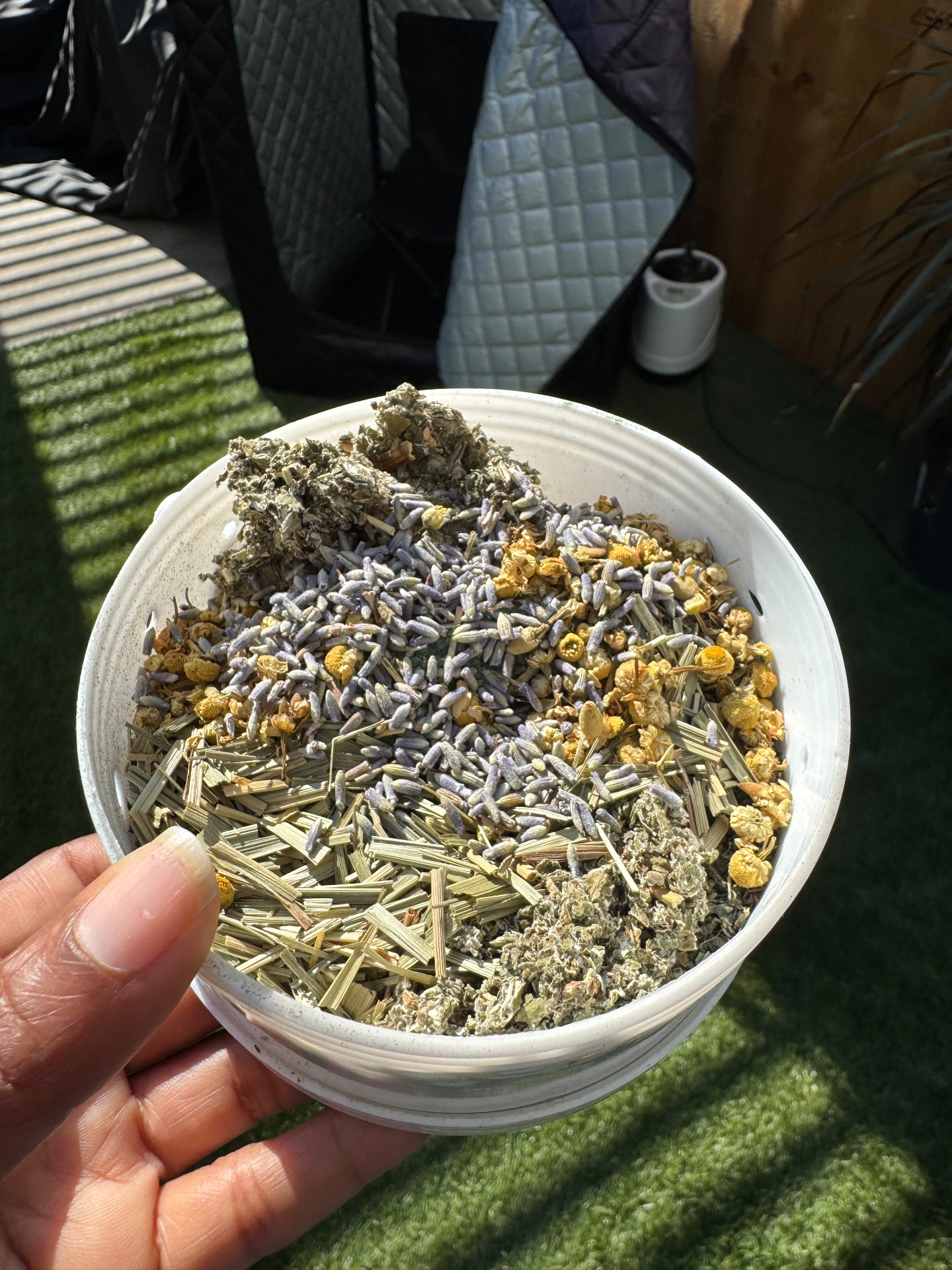
Warmth is also something to respect. That is simply why Queen By Nature screens every guest before steaming, keeps a careful eye on temperature and time, and chooses botanicals thoughtfully.
The point isn't to reject medical knowledge in order to honor traditional knowledge. Women deserve access to both.
So, does yoni steaming "work"?
It depends on what you mean by "work."
If "work" means clinically proven to shrink fibroids, cure infections, increase fertility, detoxify the uterus or balance hormones, we do not currently have sufficient high-quality clinical evidence to make those claims. Queen By Nature does not make them.
But ask different questions and you get different answers.
Is it a documented cultural practice used by women in multiple regions of the world? Yes.
Have practitioners and researchers begun collecting data and studying reported outcomes? Yes, although much of it remains preliminary.
Do some women describe the experience as meaningful, restorative, or connected to their wellbeing and their authority over their own bodies? Yes, and qualitative research is beginning to examine those perspectives.
Can it be a way to listen to your body and practice choosing what supports you? Yes. And that choice is always yours.
Those aren't contradictory answers. They're what an honest conversation looks like.
What Sacred Yoni Steam means at Queen By Nature
Queen By Nature does not offer Sacred Yoni Steam because we promise steam will fix a woman's body.
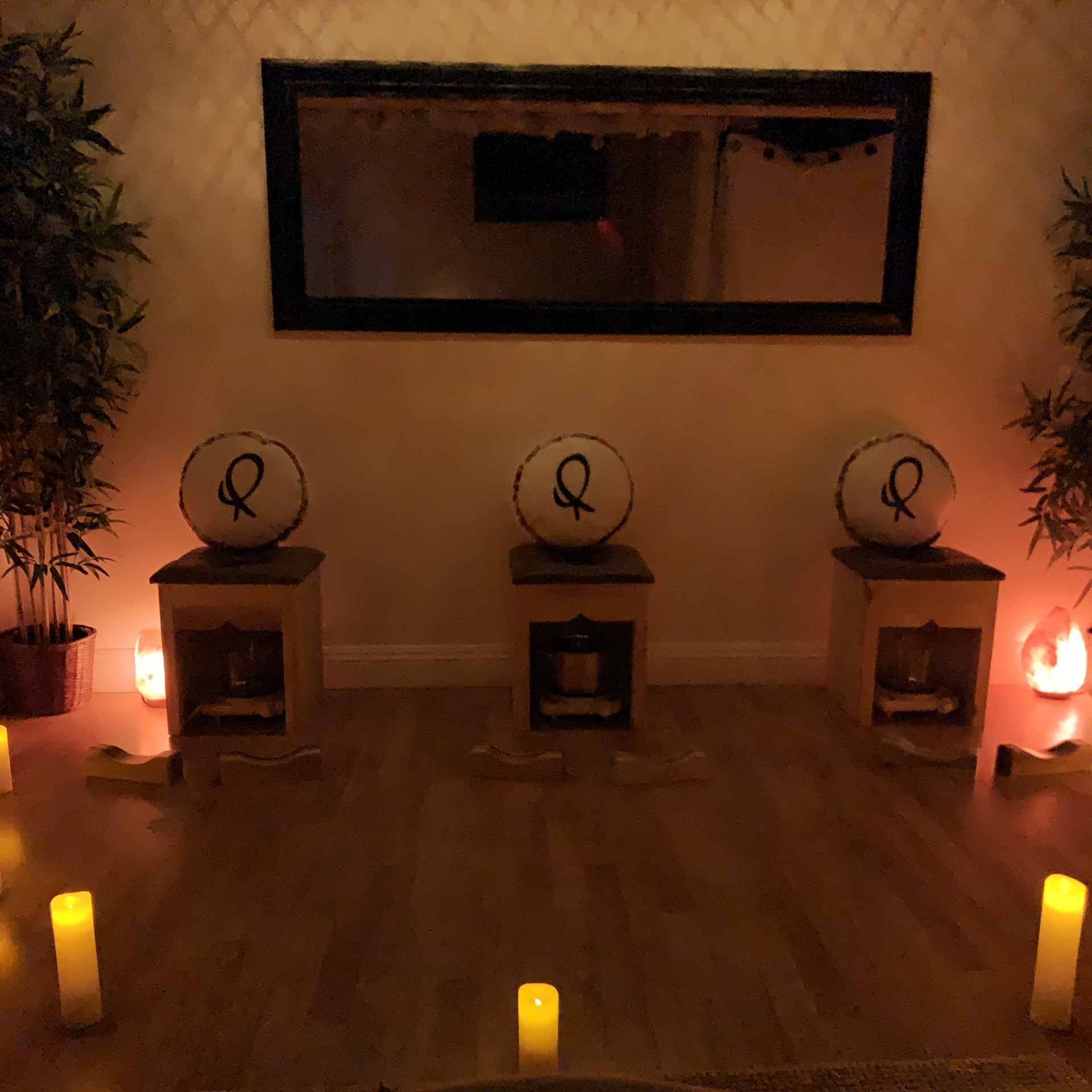
We offer it as a restorative wellness experience centered on warmth, botanicals, privacy, stillness, rest and intentional connection with the body. It lives at the heart of our Womb Spa, and it is one of the heat experiences you can choose on a Rest House day.
Our communal steam circles are kept small. There is a guided opening, quiet participation is welcome, sharing is always optional, and every steam is reserved in advance.
Safety is part of the care:
- Intake and screening are required before steaming.
- Pregnancy is a contraindication.
- Temperature and session length are intentionally managed.
- If you are recently postpartum, experiencing unexplained symptoms, managing a medical condition, or unsure whether steaming is right for you, we may ask you to check with your healthcare provider first.
This is restorative wellness, not gynecological treatment.
Staying curious
Women's traditional practices have sometimes been romanticized.
They have also sometimes been dismissed before anyone bothered to study them carefully.
Neither approach is particularly useful.
I would rather stay curious.
I want to know what our grandmothers knew.
I want to know what ethnobotanists have documented.
I want to know what women say about their own bodies.
I want to know what researchers can measure.
I want to know where the evidence is strong, where it is emerging, and where it simply isn't there yet.
And I want Queen By Nature to be a place mature enough to hold all of those conversations at the same table.
Because tradition deserves respect.
So does evidence.
And most of all, so do women.
Come for the warmth.
Come for the stillness.
Come because you're curious.
Come back to your body.
Queen By Nature offers yoni steaming as a restorative wellness practice, not medical treatment. Experiences and traditional uses described in this article should not be interpreted as evidence that steaming diagnoses, prevents, treats or cures disease. Individual experiences and testimonials are not equivalent to clinical evidence. Screening is required before steaming, and some circumstances make steaming inappropriate.
Sources and further reading
Historical sources
- Kahun Gynaecological Papyrus (Petrie Museum UC 32057), Egypt, c. 1800 BC. English translation, Digital Egypt for Universities, University College London. https://www.ucl.ac.uk/museums-static/digitalegypt/med/birthpapyrus.html
- "V-steaming: on Paltrow and Hippocrates." Leiden Arts in Society Blog, Leiden University (on vapor baths in the Hippocratic gynecological texts). https://leidenartsinsocietyblog.nl/articles/v-steaming-on-paltrow-and-hippocrates
- "Fumigation in action." Cambridge University Library online exhibition (on a 1682 illustration of a womb fumigation). https://exhibitions.lib.cam.ac.uk/smellyremedy/?p=16
Ethnobotanical and cultural research
- van Andel T, de Korte S, Koopmans D, Behari-Ramdas J, Ruysschaert S. "Dry sex in Suriname." Journal of Ethnopharmacology, 2008. https://doi.org/10.1016/j.jep.2007.11.003
- van 't Klooster C, Haabo V, Ruysschaert S, Vossen T, van Andel T. "Herbal bathing: an analysis of variation in plant use among Saramaccan and Aucan Maroons in Suriname." Journal of Ethnobiology and Ethnomedicine, 2018. https://doi.org/10.1186/s13002-018-0216-9
- Hilber AM, Hull TH, Preston-Whyte E, et al. "A cross cultural study of vaginal practices and sexuality: implications for sexual health." Social Science & Medicine, 2010. https://doi.org/10.1016/j.socscimed.2009.10.023
- Hilber AM. "Gender, Sexual Health and Vaginal Practices." WHO study presentation, 2008 (not peer-reviewed). https://gfmer.ch/Medical_education_En/PGC_RH_2008/pdf/GSVP_Martin_Hilber_WHO_2008.pdf
- de Boer H, Lamxay V. "Plants used during pregnancy, childbirth and postpartum healthcare in Lao PDR: a comparative study of the Brou, Saek and Kry ethnic groups." Journal of Ethnobiology and Ethnomedicine, 2009. https://doi.org/10.1186/1746-4269-5-25
Research from within the steaming field (practitioner-led, not peer-reviewed)
- Peristeam Hydrotherapy Institute. "Pelvic Steam Testimonial Database." https://steamychick.institute/testimonials/
- "Fourth Trimester Vaginal Steam Study" (pilot study information). https://fourthtrimestervaginalsteamstudy.com/
Peer-reviewed social research
- Duroseau B, Vigil KE, Murdock LR, Iyiewuare PO, Thorpe SY. "'You shoot it up your vagina and that's supposed to heal it?': Black women's perceptions of vaginal steaming in the USA." Culture, Health & Sexuality, 2026. https://doi.org/10.1080/13691058.2026.2618749
Medical guidance
- Cleveland Clinic. "Vaginal Steaming: What Is It and Is It Safe?" 2022. https://health.clevelandclinic.org/vaginal-steaming